Support beneath the skin
The lift releases and repositions deeper tissues, allowing the skin to drape naturally over a more supported foundation.
Open House Recording · September 22, 2026
A structural approach to a refreshed version of yourself
Dr. Cherine Kim is a double board certified facial plastic surgeon. In this talk she explains how a deep plane facelift repositions the deeper tissues of the face to restore support and contour.
Browse the slides with brief summaries from her presentation, then read the key takeaways and explore common questions.
All 13 slides, with a short recap of each key point.

A deep plane facelift addresses the underlying support of the face. Dr. Kim’s goal is a refreshed appearance that preserves the features and expressions that make you look like yourself.
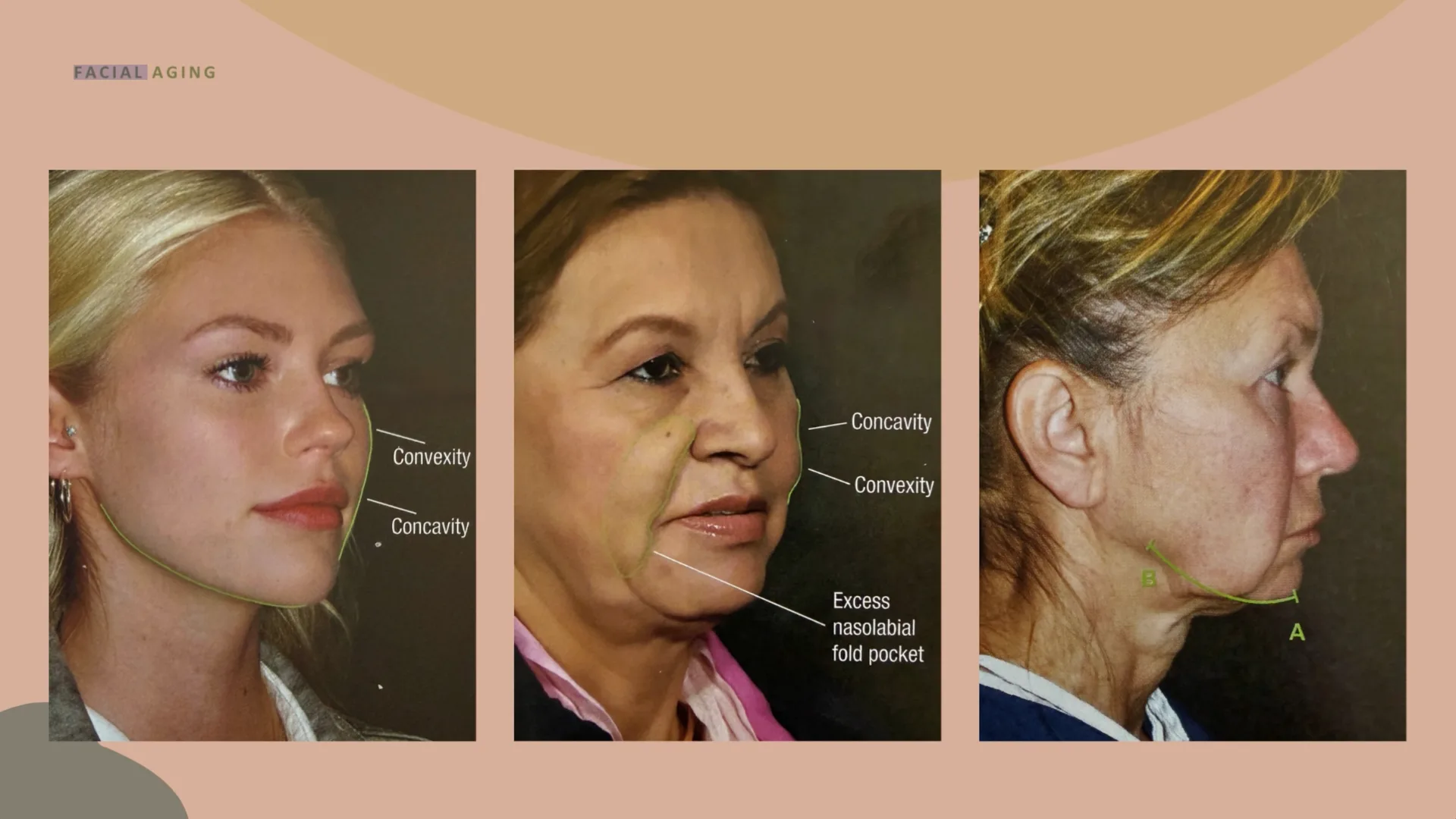
As we age, facial fat can lose volume and shift downward, while skin and supporting tissues stretch. These changes can flatten the cheeks, create jowls, and soften the jawline.
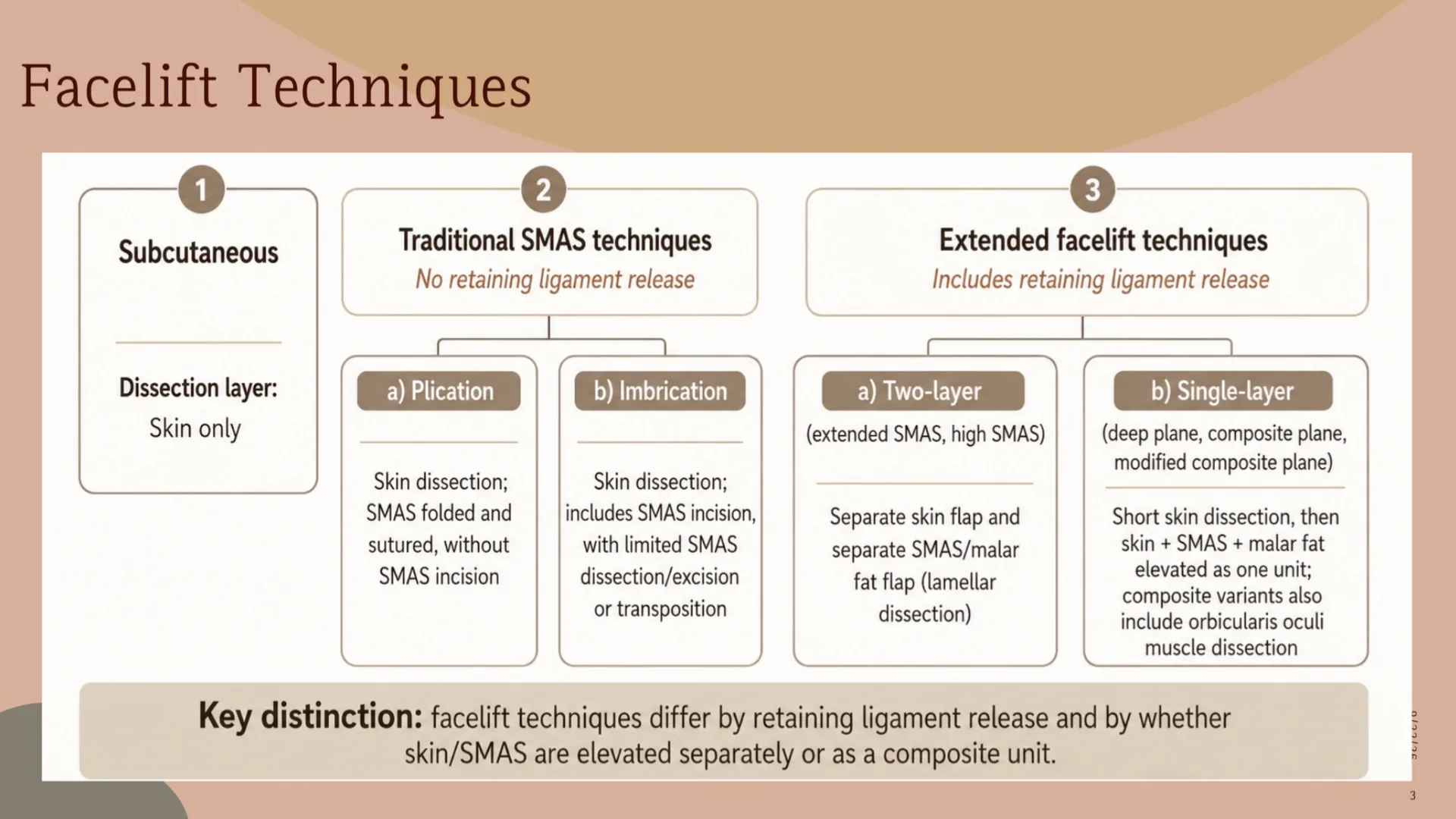
Facelift techniques work at different depths: the skin, the supporting layer called the SMAS, or the deeper plane beneath it. Dr. Kim explains how releasing and moving deeper tissues can reshape facial contours.
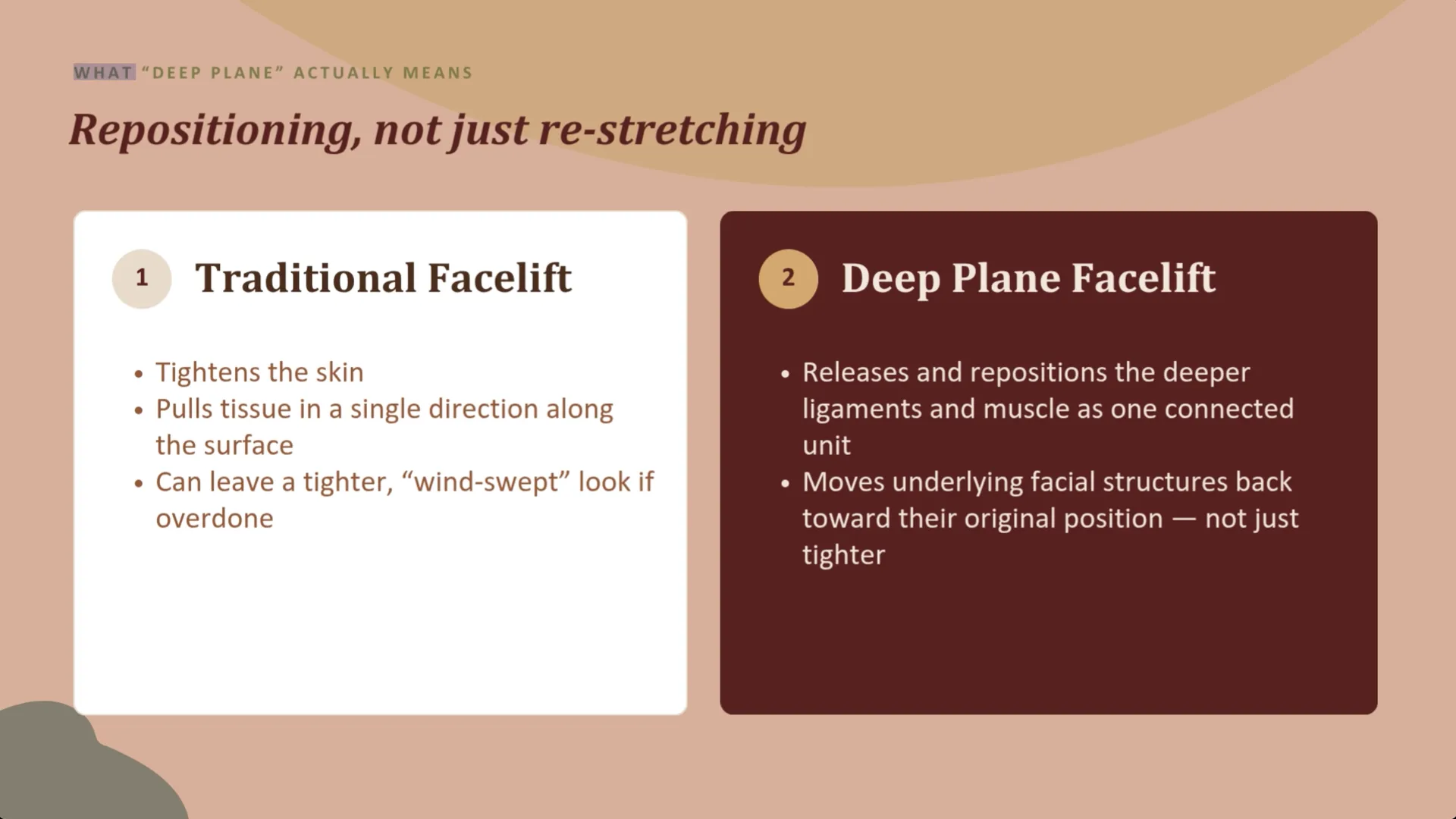
The deeper tissues are released and repositioned to provide support. The skin then drapes over that foundation with less tension, helping avoid an overly pulled appearance.
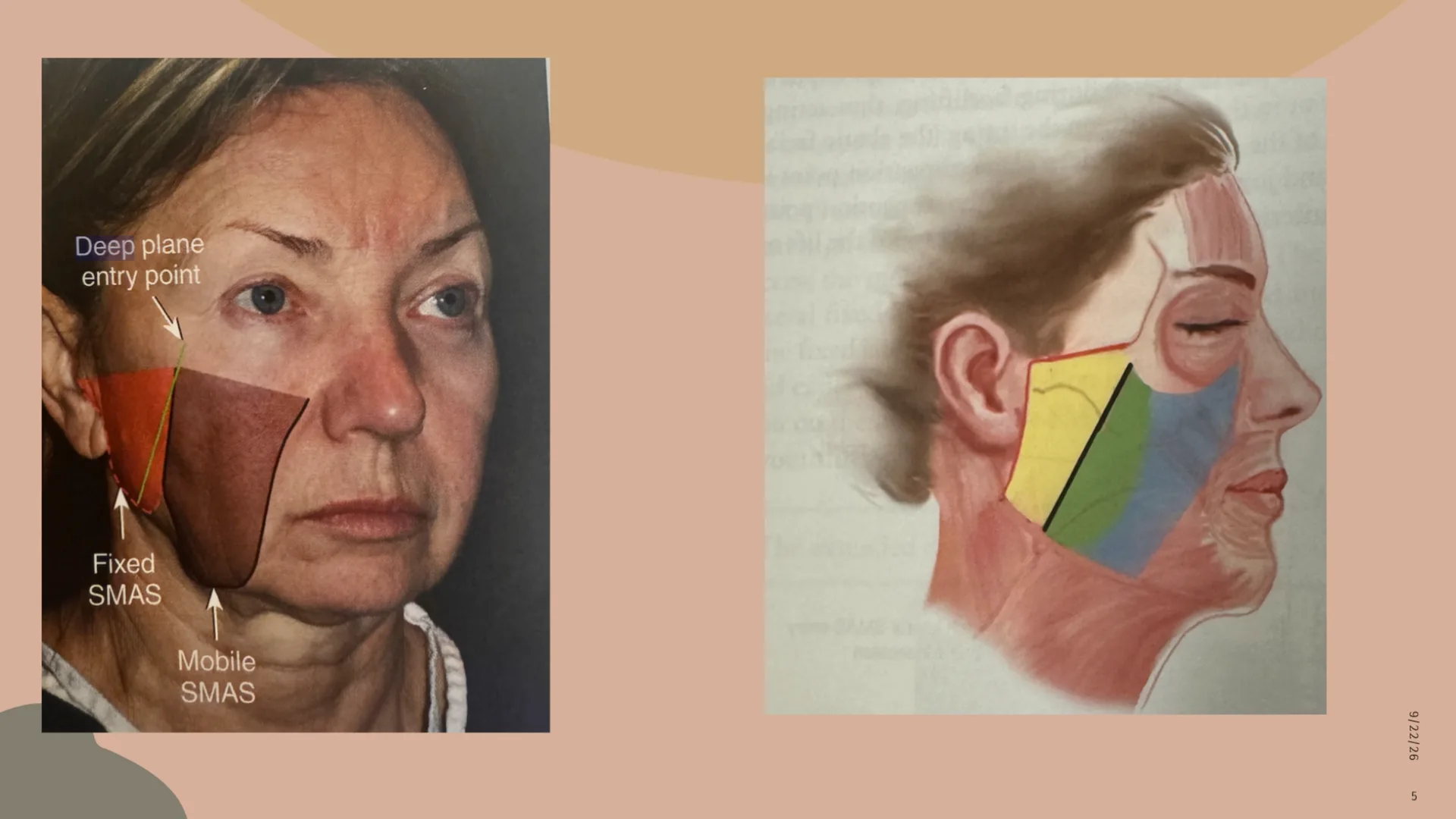
Dr. Kim describes entering a deeper layer where the cheek tissues can be moved more freely. This allows her to address jowling and fullness around the folds between the nose and mouth.
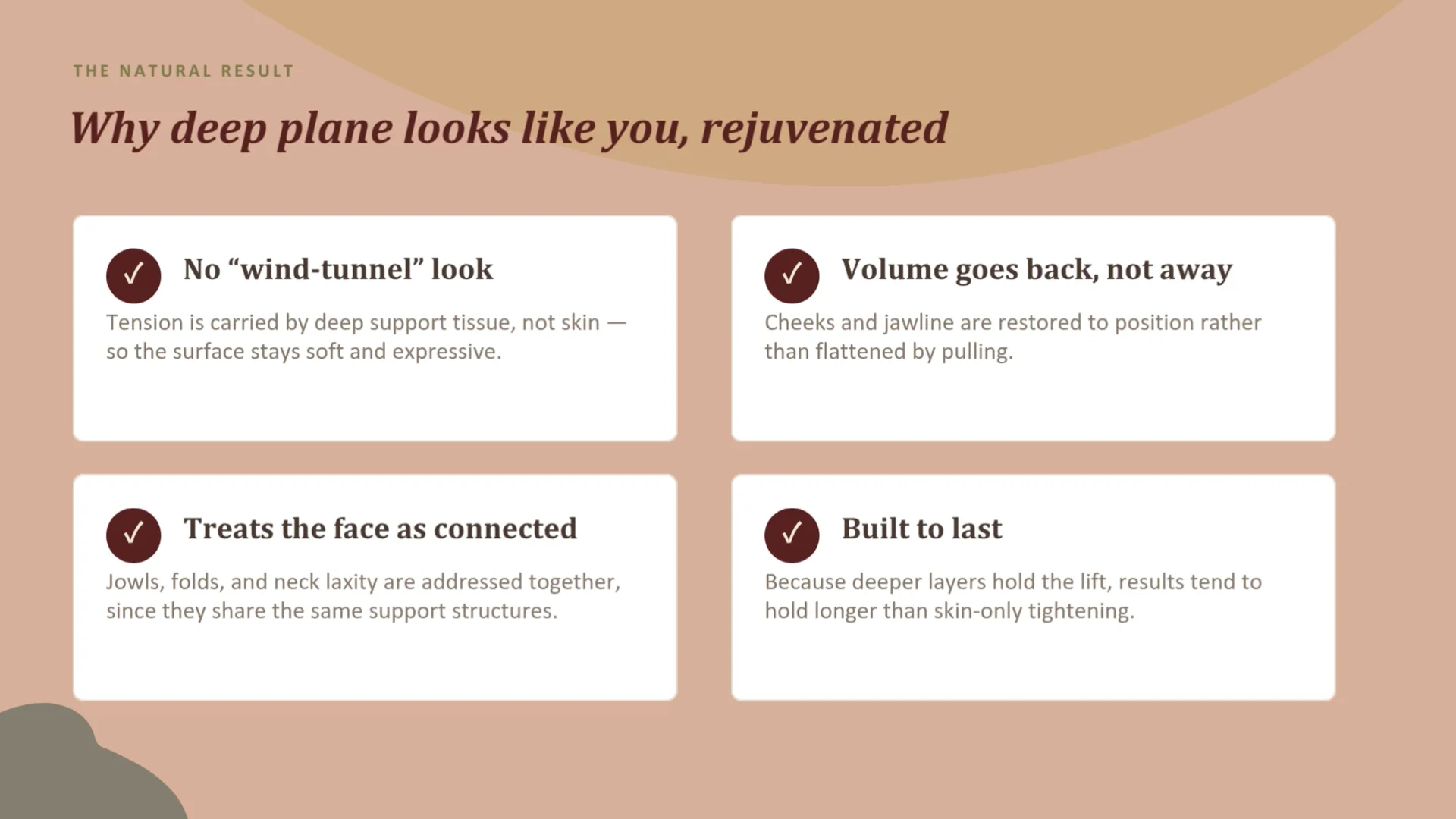
Repositioning existing facial volume helps restore contour while preserving your identity. The aim is to look rested and refreshed, with the deeper tissues doing the work of supporting the lift.

Jowls, lowered cheek tissues, and loose neck skin are concerns to discuss at a consultation. Dr. Kim reviews your anatomy and goals to determine what surgery could realistically achieve for you.
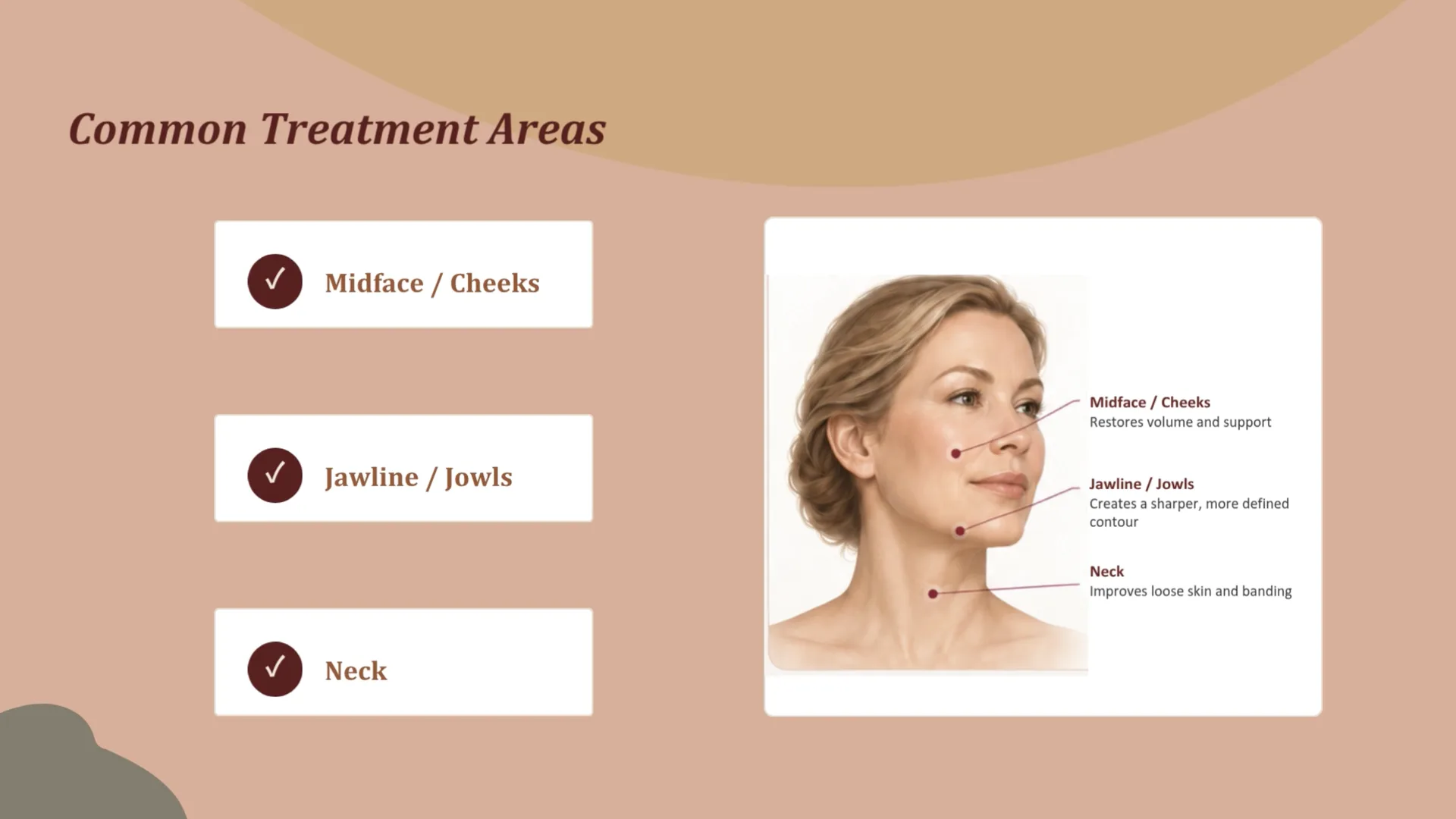
The main areas are the cheeks, jawline, and neck. Treatment can restore cheek support, improve jawline definition, and address neck laxity, with the extent of the lift tailored to your anatomy.
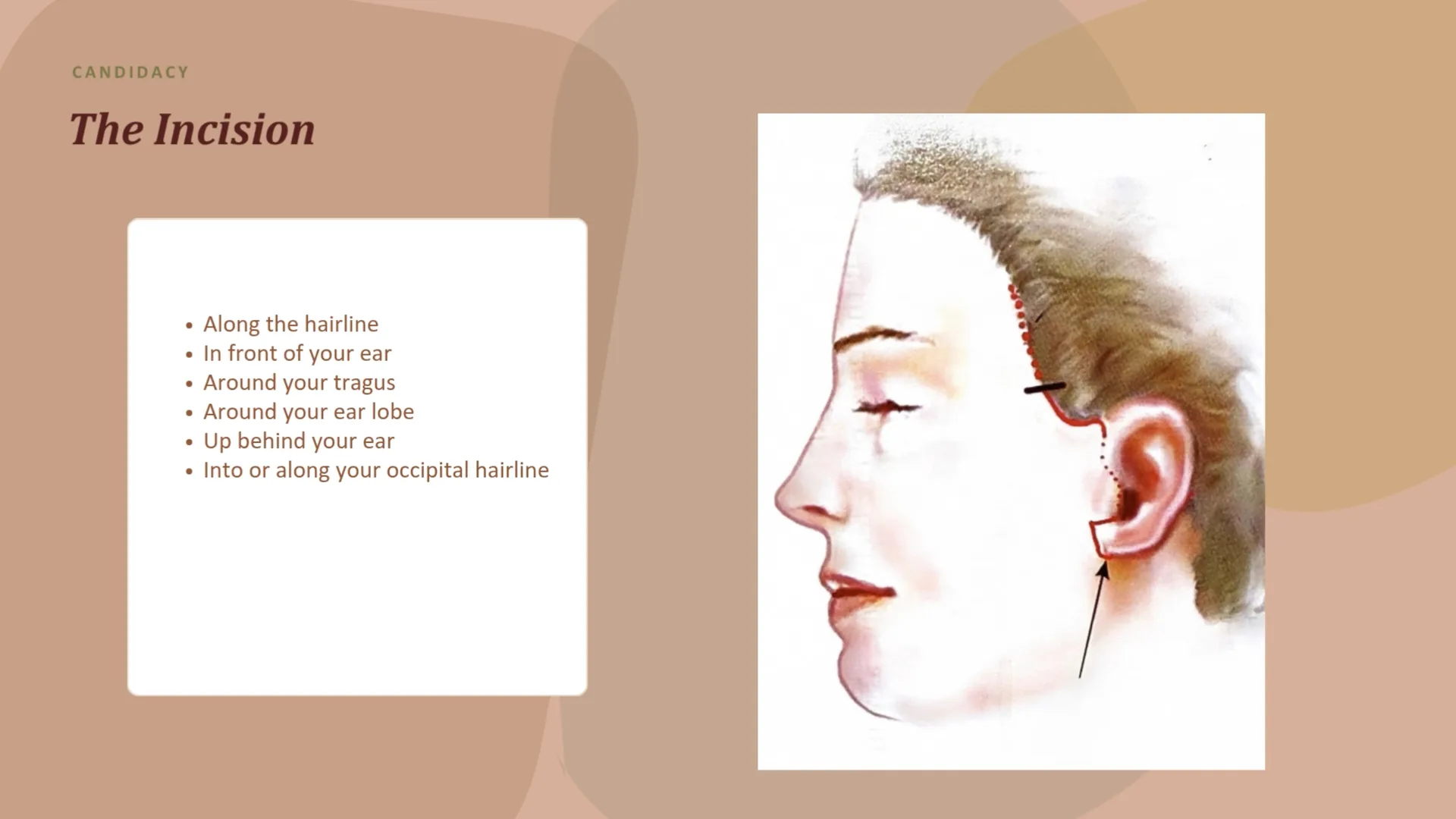
Incisions follow the hairline and the contours around the ear, with part tucked behind the small cartilage in front of the ear canal. Additional neck work may require a small separate incision.
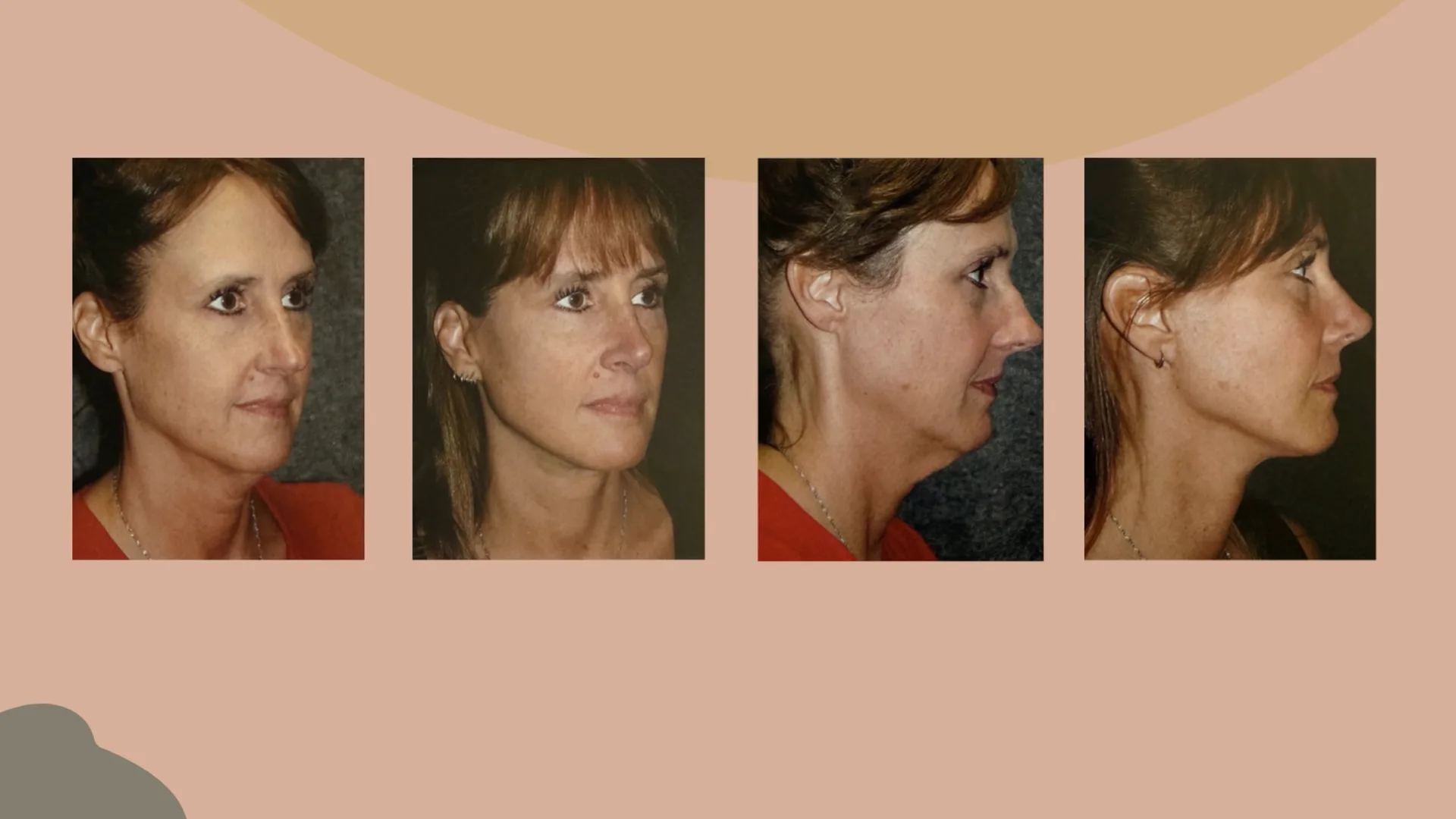
The example shows changes in the jawline and neck while the person’s features remain recognizable. These presentation photos are illustrative examples, not Dr. Kim’s own patient photos. Individual results vary.
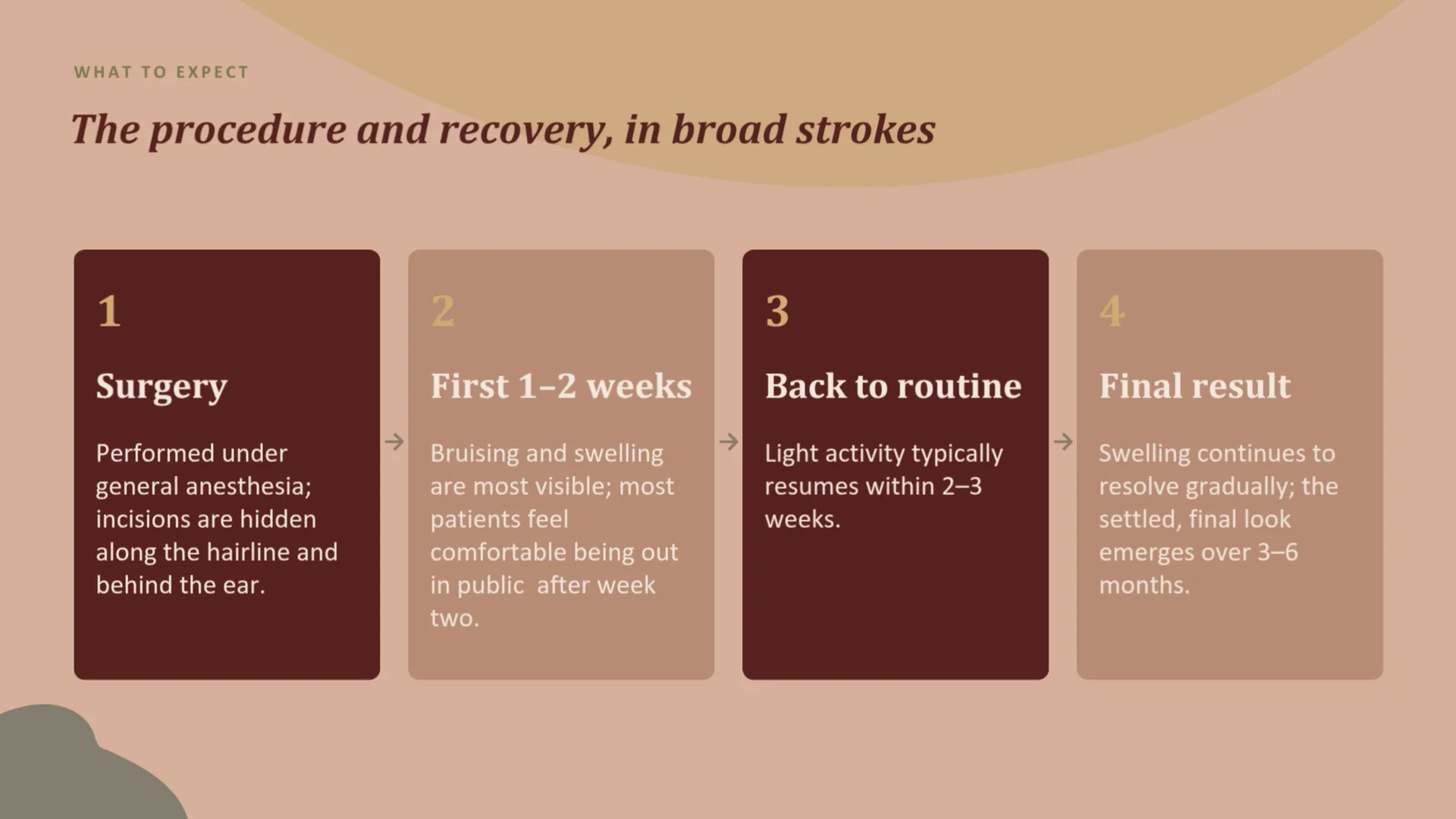
Dr. Kim describes bruising and swelling during the first couple of weeks, with a gradual return to light activities around weeks two to three. The final result settles over several months, and recovery varies.
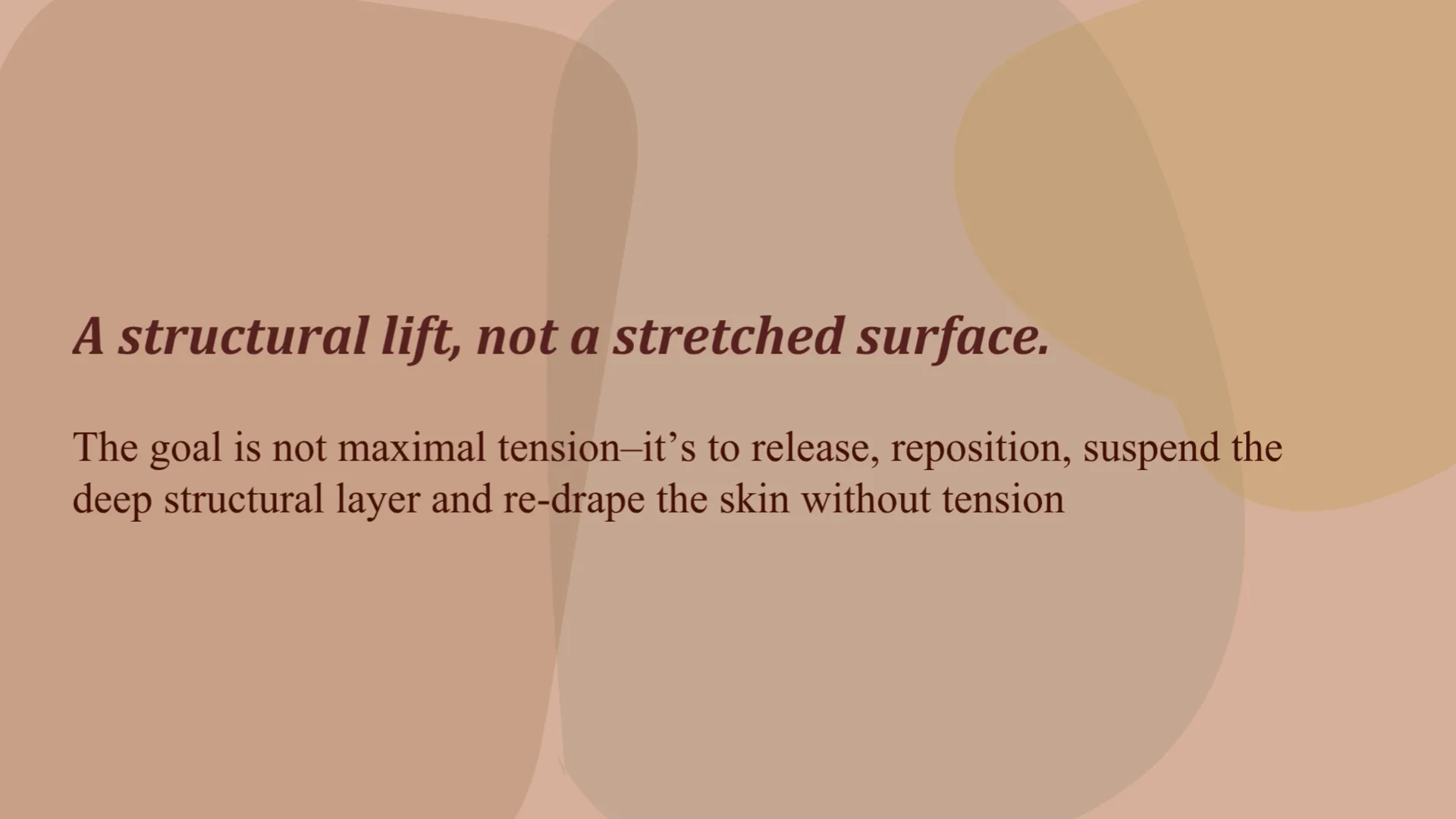
The central idea is to release, reposition, and support the deeper layers, then redrape the skin. Each surgical plan reflects where your tissues have changed and the contours you hope to improve.
A one-on-one consultation is the first step. Bring your concerns and questions so Dr. Kim can explain what is possible, discuss recovery, and help you decide whether surgery fits your goals.
The main ideas from Dr. Kim’s presentation.
The lift releases and repositions deeper tissues, allowing the skin to drape naturally over a more supported foundation.
Cheeks, jowls, and the neck are assessed together. The approach depends on your anatomy and the changes you want to address.
Plan for early bruising and swelling, follow-up visits, and a gradual return to your routine as the result settles over months.
Brief answers drawn from the presentation and audience Q&A. Your consultation is the place to discuss what applies to you.
Start with a consultation at Premier Beauty Medical Aesthetics to discuss your concerns and goals. Dr. Kim plans the lift around your anatomy, releases and repositions the deeper facial tissues, and redrapes the skin. Surgery is followed by dressing checks, stitch removal, and follow-up visits as you heal.
People concerned about jowls, lowered cheek tissues, or loose skin around the neck may benefit. The focus can differ from person to person: some need more jawline definition, while others want to address the neck. A consultation helps determine whether the procedure matches your anatomy and goals.
The lift repositions deeper tissues and existing facial volume, giving the skin a supported foundation to drape over. Dr. Kim’s aim is to preserve your recognizable features and avoid an overly pulled look. The result depends on your anatomy and individual surgical plan.
In the talk, Dr. Kim describes surgery at an outpatient surgery center in Loma Linda under general anesthesia. She estimates about four to six hours, depending on the planned work, with surgical, nursing, and anesthesia support. Your care team will confirm the details for your procedure.
Incisions generally follow the hairline, pass around the ear, and continue into or along the hair behind it. Dr. Kim places part of the incision behind the small cartilage in front of the ear canal to help conceal it. Some neck work may require a small separate incision. Scar appearance varies as you heal.
Bruising and swelling are expected during the first couple of weeks. Dr. Kim describes a return to light, everyday activities around weeks two to three, while the final result takes several months to settle. Your recovery and activity restrictions will be tailored to your healing progress.
Dr. Kim describes a dressing check the day after surgery. If drains are used, they are often removed after one or two days. Stitches are usually removed around days five to seven, although some may stay longer. Follow-up visits let the team check healing and adjust your care.
The goal is a lasting improvement in facial support and contour, but aging continues after surgery. Dr. Kim explains that some people may consider a revision later, while others are happy to continue aging from their refreshed appearance. There is no single timeline that applies to everyone.
For patients who need added volume, Dr. Kim may discuss fat grafting alongside the lift. This uses your own fat, often from the inner thigh or abdomen, to add fullness in selected areas. Not all transferred fat survives, so the amount of lasting volume varies.
Tell Dr. Kim which fillers you have had, where they were placed, and when. Existing filler can affect surgical planning. Depending on the product and amount, she may discuss waiting for it to wear down or whether dissolving it is appropriate before surgery.
Dr. Kim discusses hematoma, a collection of blood under the tissues; skin loss from reduced blood supply; and facial nerve injury, which can cause temporary or permanent weakness. These are some of the risks to review alongside your health history, expected benefits, and recovery plan before deciding on surgery.
Book a one on one visit with Dr. Kim. She will look at your face, listen to your goals, and tell you what she thinks will help.

Beauty Club members get exclusive discounts on all treatments. Plus monthly treatments, and special member-only pricing.
Stack your savings with exclusive member pricing!